There are no items in your cart
Add More
Add More
| Item Details | Price | ||
|---|---|---|---|

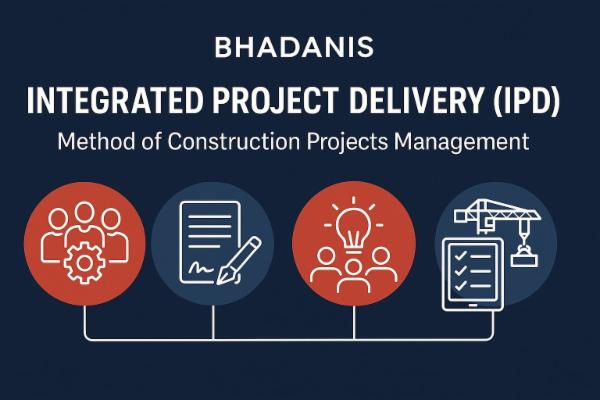
Integrated Project Delivery (IPD) Method of Construction Projects Management Online Course
Language: ENGLISH
Instructors: BHADANIS CONSTRUCTION PROJECTS PLANNING AND MANAGEMENT TRAINING INSTITUTE FOR CIVIL ENGINEERS & MANAGERS
Validity Period: 365 days
BHADANIS understands your struggle because every successful career begins with the courage to keep going.
Why this course?
Integrated Project Delivery (IPD) Method of Construction Projects Management Online Course
The construction industry across India, the Gulf, Africa, and America is evolving fast. Projects are becoming larger, deadlines tighter, and coordination more complex. Traditional delivery systems — where the owner, designer, and contractor work in isolation — often lead to disputes, rework, and financial losses.
This course, “Integrated Project Delivery (IPD) in Construction Projects,” is designed to change that. It introduces construction professionals to a modern, collaborative delivery framework where all key stakeholders — the owner, designer, contractor, cost engineer, and planner — work together from the very start under a single integrated system.
The aim is simple: to deliver better projects, faster, and more economically by replacing blame with collaboration, secrecy with transparency, and individual success with shared success.
This course is crafted for construction managers, cost engineers, planning engineers, project directors, and client representatives working on mega infrastructure and building projects, who want to learn how to apply IPD principles practically in their organizations.
If you have ever faced design rework, cost overruns, or delayed approvals, you already know the pain of poor coordination.
IPD tackles these issues head-on through three key changes:
Early involvement of all key participants.
Shared risk and reward systems.
Transparent communication and collective decision-making.
By learning IPD, construction professionals can:
Avoid design-versus-execution conflicts.
Achieve faster approvals and smoother workflows.
Align everyone toward a single project goal — value delivery, not claim generation.
This course gives you not just theoretical understanding, but a real-world, field-level approach to implementing IPD practices on projects across different countries and scales.
This professional course is divided into 15 comprehensive modules, each built to bridge theory with practical construction management.
This opening module explains how IPD differs from traditional and design-build delivery methods. You will understand how collaboration replaces competition among project stakeholders.
1.1 Concept of IPD in Construction – What IPD truly means for large projects and why it is the future of construction.
1.2 Key Principles of Collaboration, Transparency, and Shared Goals – How to establish a cooperative environment and avoid disputes.
1.3 Differences Between IPD, Traditional, and Design-Build Delivery Methods – Practical comparisons, pros, and cons with real project examples.
This module builds the foundation for understanding how IPD operates across the project lifecycle.
2.1 Core Philosophy Behind Integration of Stakeholders – Why integrating owners, designers, and contractors early saves time and money.
2.2 Project Lifecycle Stages Under IPD Approach – Step-by-step explanation from concept to handover, focusing on teamwork.
2.3 Value-Based Decision Making in Early Design Stages – How to make design choices that maximize value, not just cut cost.
Team selection is the backbone of IPD success. This module guides you on how to form a unified team and establish a shared contract.
3.1 Selecting and Onboarding Key Participants – Owner, Designer, and Contractor selection based on collaboration, not just low bid.
3.2 Multi-Party Agreement (MPA) and Shared Risk/Reward Model – How to create one contract for all, linking profit to project performance.
3.3 Roles and Responsibilities Under an Integrated Contract – How each stakeholder contributes equally under shared accountability.
In this module, you’ll learn how to unite multiple disciplines under a single project vision.
4.1 Developing a Unified Project Mission and Target Value Design – How to define shared success metrics early.
4.2 Establishing Performance Metrics and Project Objectives – Setting practical benchmarks for cost, time, and quality.
4.3 Managing Team Behavior, Trust, and Communication – How to build harmony among diverse teams from different organizations and countries.
Money is the measure of performance in construction. This module focuses on cost control through transparency.
5.1 Early Cost Targeting and Cost Transparency – How to fix realistic targets collectively.
5.2 Shared Risk and Reward Pools – Cost Sharing Framework – Understanding profit sharing based on team performance.
5.3 Value Engineering and Continuous Cost Feedback Loops – Maintaining ongoing cost balance throughout the project.
In complex projects, scheduling defines success. Learn how IPD ensures all trades move together seamlessly.
6.1 Pull Planning and Last Planner System in IPD – How to involve site teams in developing realistic schedules.
6.2 Collaborative Schedule Development and Monitoring – Jointly tracking progress across multiple disciplines.
6.3 Managing Delays and Change Without Disruption – Turning schedule changes into opportunities, not disputes.
Design coordination is the biggest challenge in large projects. This module teaches how IPD makes design practical, buildable, and aligned with site realities.
7.1 Early Involvement of Contractors in Design Stage – Ensuring constructability from the start.
7.2 Design Coordination with Fabricators, Consultants, and Site Team – Eliminating clashes and misalignments before execution.
7.3 Practical Example of Design-Assist Implementation – How designers and builders jointly solve field issues.
Transparency is not a concept — it’s a practice. This module explains how to maintain open communication channels across teams.
8.1 Establishing Information Exchange Protocols – How to ensure data flow without confusion.
8.2 Collaborative Meetings and Decision-Making Sessions – Running productive coordination meetings.
8.3 Document Control and Real-Time Reporting Practices – Keeping everyone on the same page, literally.
Every project carries risk, but IPD turns risk into a shared responsibility instead of a blame game.
9.1 Identifying and Sharing Risks Equitably – Mapping out risks early with full team participation.
9.2 Developing Risk Response Plans Collaboratively – Assigning risk mitigation responsibilities fairly.
9.3 Case Examples of Risk Events Managed Under IPD – Learning from real projects worldwide.
Quality is a shared goal, not an individual department’s responsibility.
10.1 Setting Shared Quality Benchmarks – Jointly defining inspection and acceptance criteria.
10.2 Joint Review of Work Packages – Involving all parties in QA/QC discussions.
10.3 Integrated Performance Review and Continuous Improvement – Tracking outcomes and improving during execution.
This module gives you a clear understanding of how IPD contracts are structured and legally enforced.
11.1 Key Clauses in Integrated Project Delivery Agreements – What to include to make collaboration enforceable.
11.2 Legal Responsibilities, Insurance, and Dispute Resolution Mechanisms – Protecting everyone’s interest through transparency.
11.3 Comparison of IPD Contracts With EPC, DB, and BOT Frameworks – Understanding the key legal differences in delivery models.
Even with systems in place, culture drives performance. This module teaches how leadership transforms collaboration into results.
12.1 Building Collaborative Culture and Mutual Trust – Encouraging teamwork across multiple organizations.
12.2 Leadership Behavior and Decision-Making Dynamics – Leading by cooperation instead of control.
12.3 Overcoming Resistance to Change and Traditional Practices – Moving teams from competitive to collaborative thinking.
Lean construction complements IPD by eliminating waste and optimizing flow.
13.1 Lean Construction Concepts Supporting IPD Framework – Using lean thinking to simplify complex processes.
13.2 Waste Reduction and Workflow Optimization – Practical ways to streamline site operations.
13.3 Continuous Learning and Process Refinement – Learning from ongoing feedback to improve performance.
Theory becomes clear when seen in real projects. This module presents examples from different parts of the world.
14.1 Analysis of Successful IPD Projects – Hospitals, towers, and infrastructure examples.
14.2 Lessons Learned from Global Implementations – Understanding what worked and why.
14.3 Measuring Project Success – Cost, Time, and Quality Outcomes – Comparing results against traditional models.
The final module helps participants apply all that they’ve learned to their real work environment.
15.1 Steps to Transition from Traditional Delivery to IPD – How to adapt current systems gradually.
15.2 Challenges in Adoption and Practical Mitigation Approaches – Tackling internal resistance and contractual barriers.
15.3 Creating Internal Frameworks for Future IPD Projects – Building repeatable processes for success.
Real Project Examples: Every concept is explained with live scenarios from India, Saudi Arabia, UAE, Africa, and the USA.
Field-Oriented Training: Designed for professionals who work on-site or manage large-scale project teams.
Simple Language, Practical Focus: No academic theories or complex terminologies — just clear, usable construction logic.
Applicable to All Sectors: Whether you work in infrastructure, commercial buildings, or industrial plants, IPD principles fit every environment.
This course is ideal for:
Construction Managers and Project Engineers handling large multi-disciplinary sites.
Cost Engineers and Quantity Surveyors managing budgets and risk-sharing systems.
Planning Engineers creating coordinated schedules and milestone programs.
Client and Consultant Representatives involved in design coordination and approvals.
Senior Executives responsible for project delivery and organizational transformation.
After completing this course, participants will be able to:
Lead integrated project teams across design and construction disciplines.
Develop and manage IPD contracts with shared risk/reward mechanisms.
Facilitate transparent communication and early collaboration among stakeholders.
Apply value-based design and cost decision-making from concept to handover.
Build organizational capability to handle complex projects efficiently and harmoniously.
Whether you are managing a metro depot in India, a hospital in Riyadh, or a commercial tower in Dubai, these skills will help you deliver projects that are not only profitable but also well-coordinated and conflict-free.
By the end of this course, you will:
Understand how Integrated Project Delivery (IPD) brings together owners, designers, and contractors under one collaborative system.
Learn to structure IPD contracts with shared risks and rewards, ensuring alignment of goals.
Gain the ability to implement target value design, cost transparency, and performance tracking in real-world projects.
Develop the mindset and leadership required to manage communication, build trust, and maintain teamwork across large multidisciplinary projects.
Apply IPD principles to reduce waste, improve delivery speed, and enhance construction quality in complex projects.
After successful purchase, this item would be added to your courses.You can access your courses in the following ways :